
AI Grading and Sorting for Produce
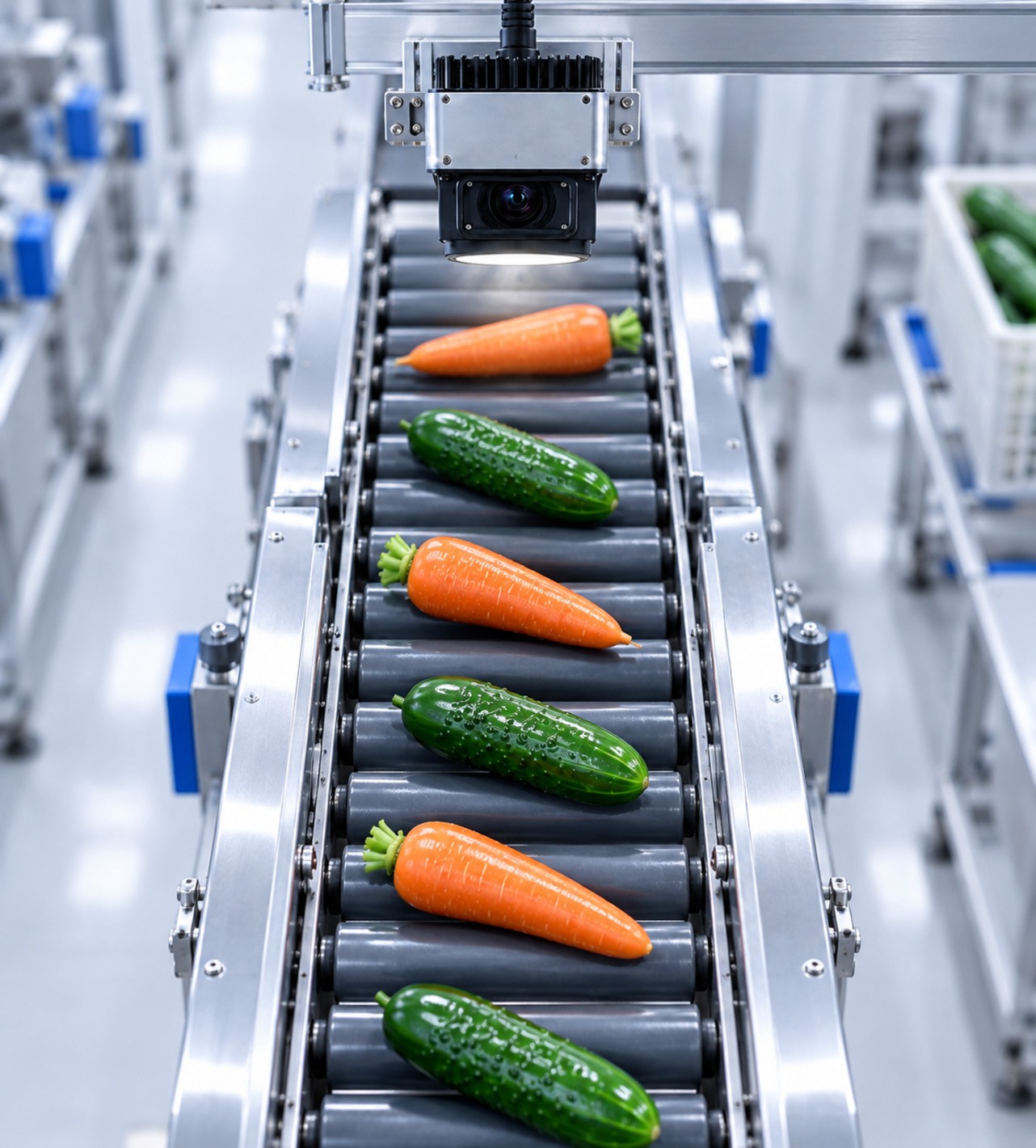
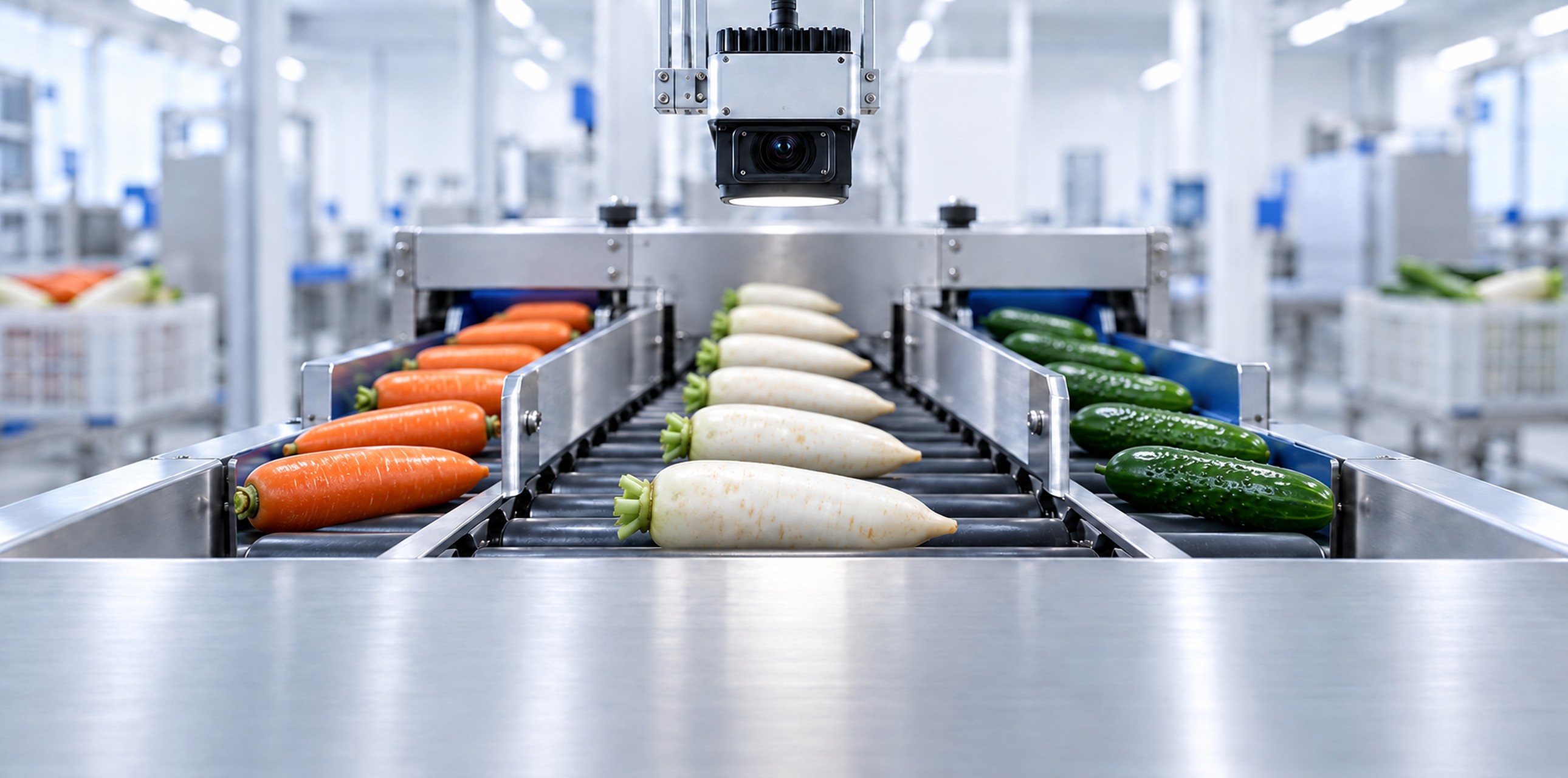
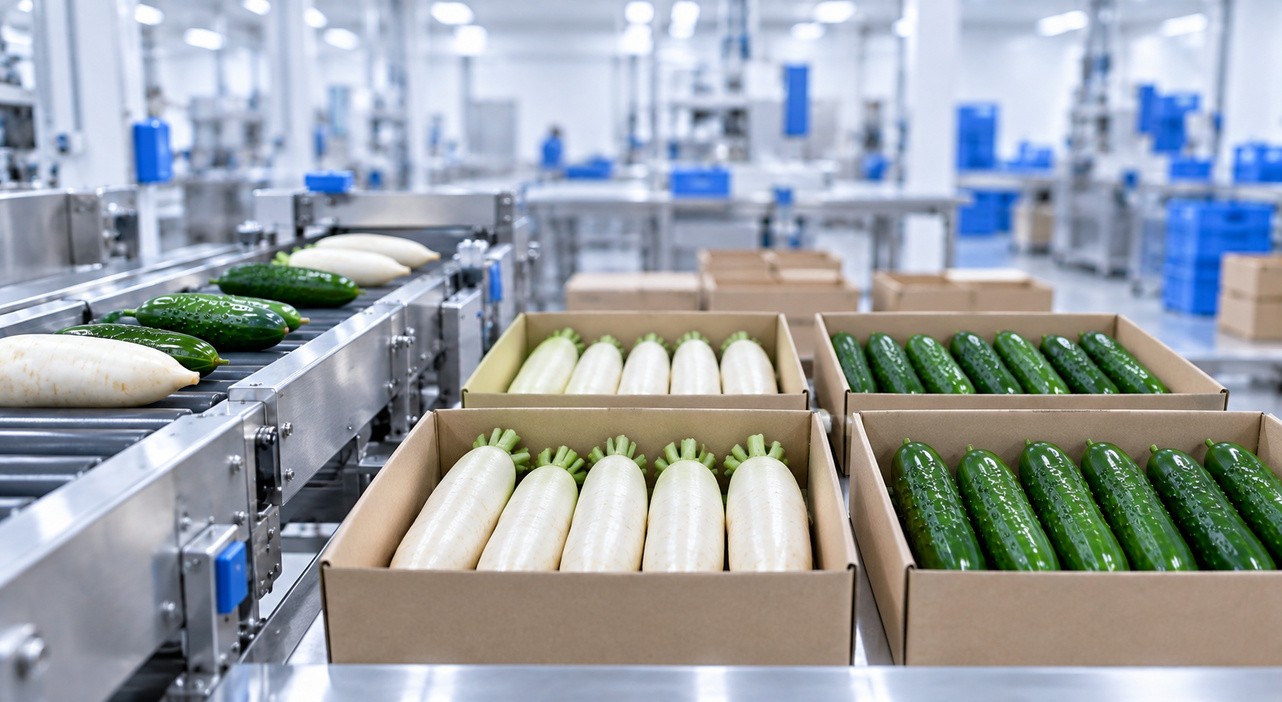
AI cameras over a conveyor grade and size 12 produce categories, then sort and box them automatically. Sorting labor is down 80%, and the system still runs reliably today.
Challenge
A large agricultural producers' cooperative in Japan ships more than ten categories of produce, including daikon radish, carrots, and cucumbers, through its sorting lines every day. Grading (shape, appearance, degree of damage) had long relied on the eyes of skilled workers, and sizing was done by hand as well. Labor ran short with the seasons, grading standards varied from person to person, and skilled workers' experience was hard to pass on. Sorting had become the step on the shipping line with heavy and highly variable labor demand.
Solution
Scope of work: Development and on-site rollout of the AI vision grading model, the conveyor camera system, and the link to sorting and boxing.
- Grading detail: Covers 12 categories including daikon radish, carrots, and cucumbers. For each category the system outputs two results at once, an A/B/C grade and an XL/L/M/S size, mapped directly to the client's existing shipping specifications.
- Training data: On-site images were collected for each category, grade, and size, all from the client's real sorting environment rather than public datasets.
- Vision grading model: Built around a deep learning vision detection model, trained category by category on the shape, appearance, and damage characteristics of each of the 12 categories, and returning grade and size in a single pass.
- Line integration: Cameras mounted above the sorting conveyor identify produce in real time, and the results drive downstream boxing by grade directly, with no manual second check.
- Timeline: Development and on-site testing took about one year in total, spanning a full crop season to verify grading stability across different periods.
Results
- 80% less sorting labor: Sorting labor fell to one fifth of the previous level, and skilled workers moved on to quality control and higher-value work.
- Running reliably: Since launch the system has run in production continuously to this day, with no return to manual sorting.
- A reusable integrated hardware and software design: The "camera + detection model + line integration" architecture also fits surface inspection, incoming material grading, and automatic sorting in manufacturing.
What the client said
"The AI grading system has greatly reduced the time and labor needed for sorting, and lets our skilled staff focus on higher-value work."
See other case studies
Eight platform-wide sales events in over two years with zero major incidents, load tested at up to 8 times normal traffic.
Video data and transaction data connected across about 500 stores, cutting the investigation of a suspicious transaction from a week to a day.